


Video Downloader - Downloader
Simple Design Ltd.
I tried Video Downloader - Downloader with a simple goal: make saving an online video less awkward than switching between several apps, browser tabs, and file managers. That focus is easy to understand from the moment you use it. This is a free video tool from Simple Design Ltd., listed in the Video Players & Editors category, and its job is much narrower than a full editing suite. It is designed for people who want a practical way to download videos from the Internet and keep them available on an Android device.
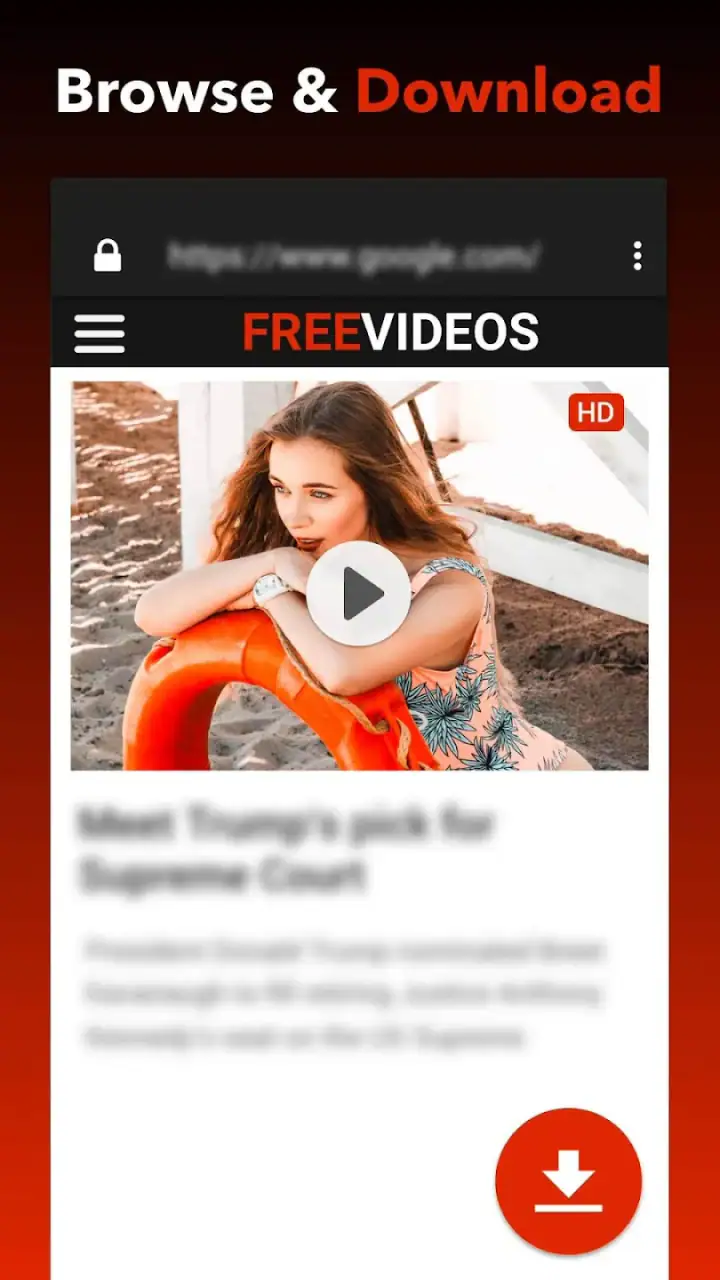
My first impression was that the app makes sense for a repeatable routine rather than occasional experimentation. You find a video, pass its address to the downloader, choose the available download option, and then manage the saved file from the device. That sounds basic, but the value is in reducing the number of steps between discovering a clip and watching it later without a connection. I would recommend it to someone who wants a dedicated downloader instead of trying to make a general browser handle every part of the process.
There is also a useful distinction to keep in mind: this is not a replacement for a complete video editor, a media library with advanced cataloging, or an official subscription service. Its strength is the download workflow. If that is what you need, it can feel pleasantly direct. If you expect sophisticated trimming, subtitles, conversion controls, or cloud synchronization, you may find the experience limited.
How I use the basic download workflow
The most reliable way to use the app is to treat it as one step in a small habit. I first open the source video in the app or in the browser I normally use, copy the video address, and then move that address into Video Downloader - Downloader. From there, I check that the detected item is the one I intended to save before starting anything. This small pause matters when a page contains several clips, advertisements, or embedded media.
For an everyday example, imagine that I am preparing for a train journey and want to save a few instructional videos while I still have a stable connection. I would collect the addresses first, process them one at a time, and then open the device’s video area to confirm that each file is present. Doing this in a planned batch is less frustrating than downloading one clip, immediately searching for it, and repeating the entire process without a system.
Latest News

Uber Eats Under Pressure: What Happens When Delivery Goes Wrong

How QR & Barcode Scanner Adapts to Android and iOS Innovations

Why Waze Navigation & Live Traffic Is Your Essential Travel Companion
CapCut Mastery: Unleash Hidden Features for Pro-Level Editing

How OS Updates Enhance Roblox Adventures

Teacher Simulator: Exam Time Turns Quick Classroom Judgments into a Repetitive Loop
The app is most useful when the source behaves in a straightforward way. A normal public video page is easier to work with than a page that requires an account, uses protected playback, or changes its address dynamically. I do not treat a download button as a guarantee that every online video can be saved. The source, its access rules, and the way its player works still matter.
Before downloading, I also think about storage. A video can occupy far more space than a document or a short audio file, so I avoid saving a large collection without checking what is already on the phone. I prefer to download only what I expect to watch soon, then remove files that have served their purpose. This habit keeps the app useful instead of turning it into an unorganized pile of forgotten clips.
One practical advantage is separation. The browser remains the place where I discover content, while the downloader handles the saving task. That makes the process easier to repeat and gives me a clear moment to decide whether a particular video is worth keeping. It also reduces the temptation to leave many browser tabs open just because I might want to watch something later.
Gallery
There is a legal and ethical side to this workflow as well. I use the app for videos I am allowed to save, such as my own material, openly downloadable content, or videos whose creator or service permits offline storage. I would not use it to bypass access controls or redistribute someone else’s work. The fact that a video plays online does not automatically mean that downloading or sharing it is permitted.
Settings I would check before building a routine
I would spend a few minutes looking through the available settings before relying on the app regularly. The important questions are practical: where downloaded files are stored, how the app identifies them, how downloads behave when the connection changes, and whether the chosen options fit the available storage. Even when an app looks simple, these details decide whether the result feels tidy or confusing.
File location is especially important. If I cannot quickly find a saved video, the download has not really solved my problem. I prefer a predictable folder and a naming approach that lets me recognize the content later. When a file name is vague, I rename or organize it after downloading if the phone’s file tools allow that. The goal is not perfect archiving; it is being able to find the clip without opening several unrelated folders.
I also check the quality choice instead of automatically selecting the largest available option. Higher quality is useful when I plan to watch on a larger screen, but it is unnecessary for a short reference clip viewed on a phone. Choosing a more modest option can save storage and shorten the download, while a higher setting makes sense for detailed demonstrations, presentations, or footage where small text matters.
Connection conditions should influence the timing. I prefer to start larger downloads on a reliable network and avoid filling the queue when I am moving between weak signals. If a download pauses or fails, I check the connection and the source before repeatedly tapping the same control. Repeated retries can waste time and make it harder to tell whether the problem is temporary or caused by the page itself.
Notifications and background behavior are worth noticing too. I want enough feedback to know whether a file finished, but I do not want a constant stream of alerts for every small action. If the app offers controls for these behaviors on the device, I adjust them to match how I use the downloader. A person who starts downloads while doing other tasks may prefer visible completion notices; someone downloading only while watching the screen may want fewer interruptions.
The current version is 1.5.2, and the app runs on Android starting with version 6.0. That gives it a broad reach across older Android phones, although the exact experience will still depend on the device, its storage, and the source website. I would not judge performance only by the app’s age or compatibility line. A modest phone with little free space can make any video downloader feel slow, while a newer device may handle the same routine more comfortably.
Faster patterns that make the app more useful
Experienced use is less about pressing buttons quickly and more about removing avoidable decisions. I keep a short temporary list of videos I genuinely want, then process that list together. This prevents me from starting downloads impulsively and later wondering why the phone is full. It also gives me a natural point to review titles, remove duplicates, and choose sensible quality settings.
Another useful pattern is to copy the address before opening the downloader. Instead of switching back and forth while trying to remember which page I was viewing, I collect the exact address, open the downloader, and verify the result there. This is particularly helpful when several videos have similar titles. A moment of verification is faster than discovering later that I saved the wrong clip.
I also separate “watch soon” files from “keep” files. A temporary download might be a tutorial I need for a weekend project, while a long-term file could be my own recording or material I have permission to retain. After watching, I delete the temporary item. This simple distinction prevents the common mistake of treating every download as a permanent archive.
For repeated work, I use consistent names based on the subject rather than relying entirely on whatever title the source provides. If I save several lessons or demonstrations, a clear sequence helps me find the right one later. This is not an advanced feature of the app; it is a workflow habit that makes the app’s output more manageable.
I would also avoid starting several demanding downloads at the same time unless the device and connection handle that comfortably. A queue that looks efficient can become slower if the network is divided too heavily or the phone is busy writing large files. Processing a few important videos in a controlled order is often more dependable than trying to save everything immediately.
One trade-off is convenience versus control. A dedicated downloader can be faster than manually handling a video through a browser, but it may not offer the same context as the original service. I therefore keep the source page available until I have confirmed the file. If the video includes an important description, chapter list, or accompanying material, I save those details separately rather than assuming the downloaded file contains the whole experience.
Where the app reaches its limits
The biggest limitation is that online video services do not all work in the same way. Some pages expose a simple downloadable video, while others rely on protected streams, account-based access, or playback systems designed specifically to prevent ordinary saving. Video Downloader - Downloader should not be viewed as a universal key for every platform. When the source does not cooperate, an official offline mode is usually the better and more respectful option.
This also explains why results can vary from one video to another. A successful download from one page does not prove that every page will be detected correctly. If the app fails, I first check whether the address is complete, whether the video is publicly accessible, and whether the source permits downloading. I would not keep changing random settings without understanding the source, because that usually creates more confusion than progress.
The app is not the right choice for people who need detailed editing after the download. I would choose a separate editor for cutting several clips together, adding transitions, correcting color, mixing audio, or producing a finished social video. A downloader can be the first step in that workflow, but it should not be mistaken for the editing stage.
It may also disappoint users who expect a polished media-management system. If you have hundreds of files, need automatic tagging, want synchronized playback across devices, or depend on a sophisticated search library, a dedicated media organizer will probably serve you better. This app is more comfortable with a focused collection that I can inspect and clean regularly.
Storage and battery are further practical limits. Large files take space, and repeated downloading can be inconvenient on a phone with limited capacity. I make room before a planned batch and remove failed or duplicate files afterward. I also avoid downloading material simply because it is available; keeping only useful videos is the difference between an efficient offline library and a storage problem.
There is a privacy consideration in the broader sense of handling downloaded material. Once a video is stored locally, anyone with access to the device may be able to view it, depending on the phone’s own protections. I avoid saving sensitive material on a shared device and use the phone’s security features. The app’s usefulness should not encourage careless storage of personal or confidential recordings.
Who should use it, and who should skip it?
I think Video Downloader - Downloader suits Android users who regularly need offline copies of permitted online videos and want a focused tool rather than a complicated media suite. It can be useful for travel preparation, personal reference, reviewing one’s own uploads, collecting educational clips for a short project, or keeping a tutorial available when connectivity may be unreliable.
It is also approachable for someone who does not want to learn a large set of editing controls. The basic idea is easy to understand: bring in a video address, review the available result, save the file, and manage it afterward. That simplicity is a real strength when the task is occasional but important.
I would suggest skipping it if your main need is official offline viewing inside a streaming service. The service’s own download feature may provide better account integration, playback history, subtitles, and content protection. I would also look elsewhere if you need iPhone support, because this review concerns its Android availability and the stated minimum Android requirement.
People who download copyrighted material without permission should not use it for that purpose. Nor is it ideal for someone who expects every social platform, private page, or protected stream to work. In those cases, the limitation is not something I would solve by repeatedly reinstalling the app; the appropriate alternative is the platform’s authorized offline option or a tool designed for content the user owns.
My verdict after settling into the workflow
Video Downloader - Downloader earns its place by keeping a common task focused. It is free to install, carries a Teen content rating, and has reached over one hundred million installs with a 4.7 average from around five hundred ninety thousand ratings. Those figures suggest that the straightforward downloader idea appeals to a large Android audience, but they do not remove the need to check each source and organize the resulting files sensibly.
The developer, Simple Design Ltd., has positioned this as a practical video utility rather than an all-purpose production tool. I agree with that emphasis. When I use it with a clear routine—copy the correct address, choose a reasonable quality, download on a stable connection, confirm the file, and clean up afterward—the app feels useful and uncomplicated.
There are optional in-app purchases priced at $2.99 per item, so I would pay attention to which functions are available without spending and whether an optional purchase solves a problem I actually have. I would not buy anything merely to compensate for a source that does not permit downloading. No paid option can turn an incompatible or protected page into a legitimate, reliable download.
My final recommendation is conditional but positive: try it if you need a simple Android downloader for permitted content and are comfortable managing saved files yourself. Start with one ordinary video, verify where it goes, and then build a small repeatable habit. The best results come from treating the downloader as part of an organized offline routine, not as a universal answer to every online video. For that specific job, Video Downloader - Downloader is a sensible, accessible choice; for protected streaming, serious editing, or large-scale media archiving, I would choose a more specialized alternative.
FAQs for Video Downloader - Downloader
What video formats does Video Downloader - Downloader support?
Video Downloader - Downloader supports a wide range of video formats, including MP4, AVI, MOV, and more. This ensures that users can download videos from various platforms without worrying about compatibility issues. The app also provides options to convert downloaded videos into different formats, enhancing its versatility.
Is Video Downloader - Downloader free to use?
Yes, Video Downloader - Downloader offers a free version with basic features. However, there may be in-app purchases or a premium version available that provides additional features such as faster download speeds, ad-free experience, and enhanced video quality. Users can choose according to their needs.
Can I download videos from any website using this app?
Video Downloader - Downloader supports downloading from most popular video-sharing platforms, but not all websites may be compatible due to copyright restrictions. It is important for users to ensure they have the right to download content before proceeding, as the app adheres to legal guidelines.
Does Video Downloader - Downloader have any limitations on video length or size?
While Video Downloader - Downloader is designed to handle a variety of video sizes, the length and file size might affect download speed and storage space on your device. It's advisable to check the available storage on your device and ensure a stable internet connection for larger files.
How user-friendly is the interface of Video Downloader - Downloader?
The app features an intuitive and user-friendly interface designed for easy navigation. Even users who are not tech-savvy will find it straightforward to search, download, and manage videos. The app offers step-by-step guidance and tutorials to assist new users in getting started efficiently.
Pros
- Easy-to-use interface for quick downloads.
- Supports multiple formats and resolutions.
- Fast download speeds enhance user experience.
- Allows background downloading for multitasking.
- Built-in browser simplifies video searching.
Cons
- Frequent ads can disrupt the user experience.
- Limited support for some streaming platforms.
- Requires permissions that may concern privacy.
- Occasional crashes reported by some users.
- In-app purchases needed for premium features.


